Tourteau Fromager: Poitou-Charentes’ Dark-Crusted Cheesecake
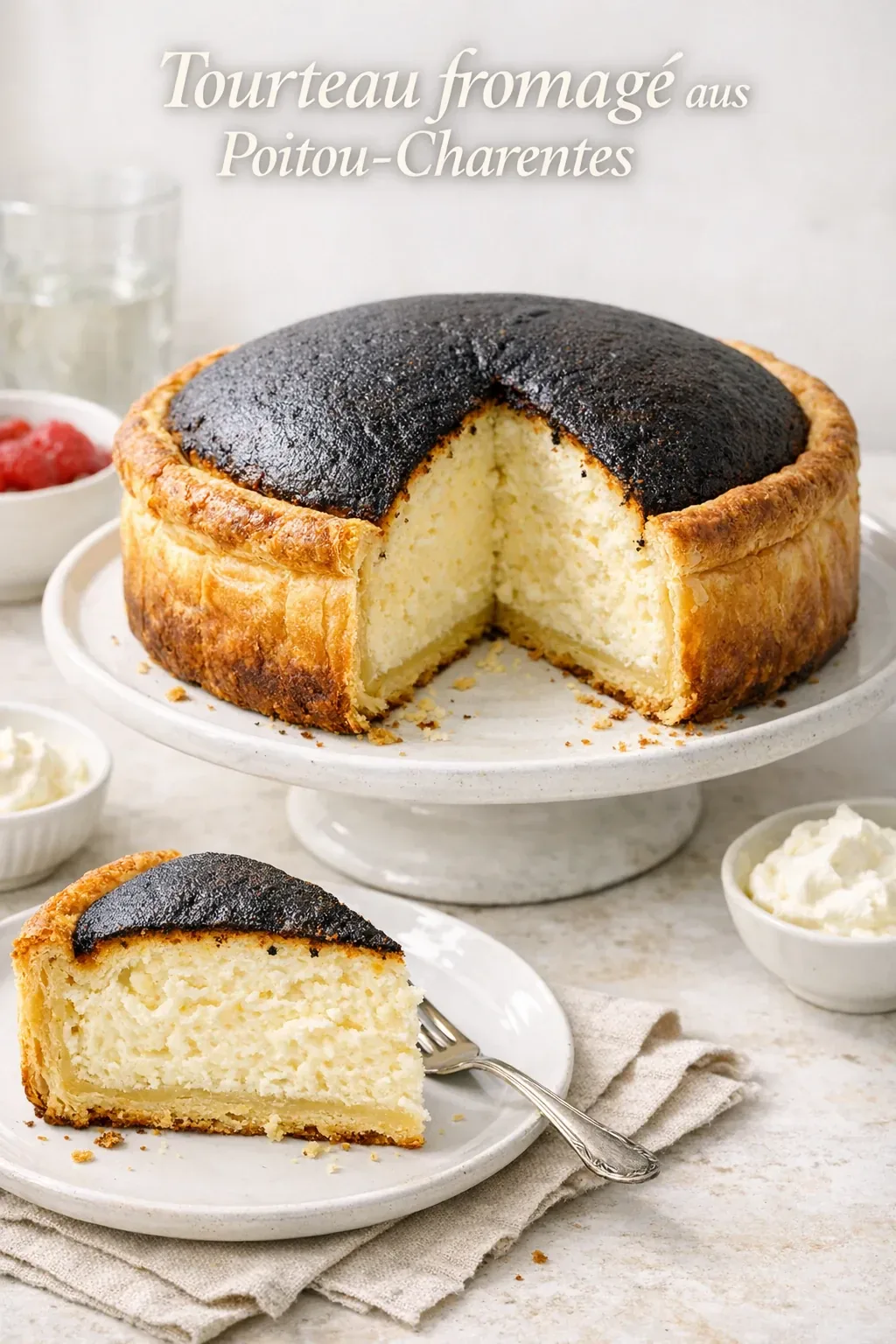
Tourteau fromager is a distinctive cheesecake from Poitou-Charentes, known for a deeply browned top and a soft, airy centre. Beneath the dark crust is a lightly moist filling made with fresh goat cheese, with a texture somewhere between a soufflé and a rustic cheesecake.
What makes tourteau fromager different
Rather than a crumb crust and a dense cream-cheese filling, this cake has a pastry shell and a delicately risen cheese mixture. Fresh goat cheese gives the filling its character, while sugar and vanilla soften its tang. Cognac is optional, adding another subtle note without being essential to the cake.
The pronounced colour on top is intentional, not a sign that the cake has been spoiled. The filling rises as it bakes and settles somewhat as it cools, leaving its characteristic airy texture.
A contrast of textures
The pastry provides a buttery, flaky contrast to the soft, slightly elastic centre. Let the cake cool completely before serving: it will be easier to slice, and the filling will have time to set. A short chill makes it firmer still. The flavour also has time to settle, so the cake is well suited to making ahead.
How to serve it
Tourteau fromager can be served on its own or with softly whipped cream, fresh berries, vanilla ice cream or a gently salted caramel cream. Choose a mild, creamy fresh goat cheese for a subtler flavour; a more mature cheese will taste more pronounced.
Tourteau fromager from Poitou-Charentes
Equipment
- 18 cm springform pan or deep cake tin
- parchment paper
- Rolling pin
- Hand mixer
- Dough scraper
Ingredients
For the pastry
- 300 g wheat flour
- 2 g fine sea salt
- 220 g cold salted butter
- 100 ml ice-cold water, plus a little more as needed
For the filling
- 170 g fresh goat cheese
- 150 g caster sugar
- 4 eggs, separated
- 30 ml whole milk
- 40 g wheat flour
- 1 g fine sea salt
- 5 g vanilla sugar
- 5 ml Cognac, optional
Instructions
Make the pastry
- Mix the flour and salt in a bowl. Add the very cold butter, cut into pieces, and toss everything together loosely so the butter is well coated in flour.
- Add the ice-cold water and mix the dough with your hands only until it just comes together. If it still seems too dry, work in a little more water, a tablespoon at a time. It is important not to knead it for too long so the pieces of butter remain intact.
- Transfer the dough to the work surface and fold it over itself a few times using a dough scraper. Press it down gently to flatten it slightly. Wrap it in plastic wrap and chill for at least 30 minutes; the freezer works especially well for this.
Laminating and chilling
- On a lightly floured surface, roll the dough out into a rectangle about 1 cm thick. Brush off any excess flour and fold the dough in thirds, like a letter.
- Then turn it so the closed side is on the left, roll it out again and fold it into thirds once more. Chill the dough for another 30 minutes.
- Repeat this process twice more, for a total of 4 single turns. The dough should stay well chilled throughout. If the butter softens, it’s best to pause briefly and chill the dough again.
- After the last turn, divide the dough into 2 pieces, wrap them well and chill for at least 1 hour. About half is used for this cake. The rest can be kept in the refrigerator for a few days or frozen.
Prepare the tin
- Preheat the oven to the grill setting at 270 degrees top heat or 250 degrees fan. Butter the 18-cm tin well.
- Roll out one half of the dough and use it to line the tin. Prick the base several times with a fork. Place the lined tin in the freezer while you prepare the filling. Keeping the dough cold helps it hold its shape and gives it a better flaky texture later.
Beat the filling
- Stir the fresh goat cheese, 130 g sugar, egg yolks, milk, salt, vanilla sugar and Cognac together in a bowl until smooth. Then briefly stir in the flour. The mixture should be as lump-free as possible.
- In a second, clean bowl, start beating the egg whites with a pinch of salt. Once foamy, gradually add the remaining sugar and beat until soft peaks form.
- Gently fold the beaten egg whites into the cheese mixture in 2 to 3 batches. I prefer to use a spatula rather than a mixer here, to keep as much air as possible in the filling.
Bake
- Pour the filling into the prepared tin and smooth the surface.
- Bake the cake at a very high temperature for 5 minutes. Then reduce the temperature to 250 degrees top heat or 230 degrees fan and bake for another 15 minutes.
- Then lower the temperature to 180 degrees conventional heat or 160 degrees fan and bake the Tourteau fromager for 40 to 60 minutes, until it has risen noticeably and is very dark on top. This deep browning is intentional.
Leave to cool completely
- Place the cake in its tin on a wire rack and leave it to cool completely. It will sink a little as it cools; this is normal. Only then carefully remove it from the tin and cut it into pieces. For clean slices, wipe the knife briefly between cuts.
Notes
- The puff pastry makes more than you need for one cake. The other half freezes very well and can later be used for savoury tarts or small apple turnovers.
- The top can become very dark. This almost burnt-looking crust is characteristic of a classic Tourteau fromager.
- If you prefer a milder goat’s cheese flavour, choose very fresh, creamy goat’s cheese. More mature cheese has a much stronger flavour.
- The cake is easiest to slice once it has cooled completely. When lightly chilled in the refrigerator, the filling will be a little firmer.
- Berries, softly whipped cream, vanilla ice cream or a slightly salty caramel cream are especially good accompaniments.